
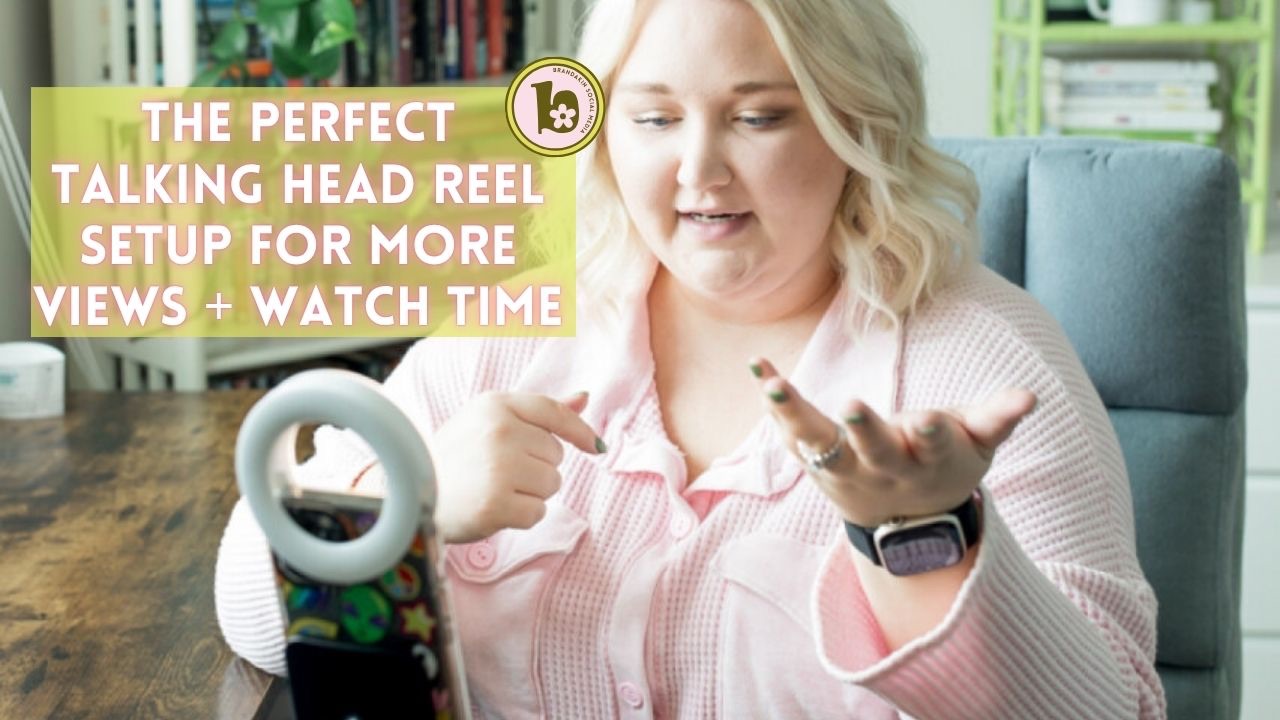
The Perfect Talking Head Reel Setup for More Views and Watch Time
Creating a great talking head Reel isn't just about what you say.
It's also about how you present it.
The placement of your captions, hook, and framing can make the difference between someone watching your entire video or scrolling past after a few seconds. Small adjustments make your content easier to consume, and when your content is easier to watch, people naturally stay longer.
The first thing to think about is your captions.
Place your closed captions as close to your mouth as possible. When you're speaking, that's where your audience is already looking, so keeping the captions nearby makes them effortless to follow. It also helps prevent them from being covered by Instagram's interface, like the caption preview, username, or engagement buttons.
This is especially important because many people watch social media videos with the sound off. Captions aren't just a nice addition anymore. They're essential for keeping viewers engaged.
Next, pay attention to your hook.
Your hook text should sit near the top center of your video and stay on screen for the first three to five seconds. This gives viewers an immediate reason to keep watching while avoiding Instagram's interface elements that can block important text.
Once your hook disappears, that same space becomes the perfect place for supporting text, key takeaways, or visuals that reinforce what you're talking about.
Finally, think about your framing.
Keep yourself centered in the frame with enough room around your head and shoulders for text to fit comfortably. If you're too close to the camera, your captions and graphics compete for space. If you're too far away, you lose connection with your audience.
A balanced frame allows every element of your video to work together instead of fighting for attention.
These may seem like small details, but they're the kinds of refinements that improve retention, increase watch time, and give your content a better chance of reaching new people.
Creating better content isn't always about buying new equipment or learning complicated editing techniques.
Sometimes it's simply about making your content easier to watch.
And those small improvements add up over time.